


















A single calf mew can sound realistic. But a calf in distress tells a story, and that story can trigger a powerful response from both cows and bulls.
In a recent Shot IQ podcast conversation, elk-calling expert Joel Turner explained why he keeps his female elk vocalizations high in the calf spectrum. Rather than relying on mature cow sounds that may make other cows suspicious, Turner uses emotional, distressed calf sounds designed to communicate one urgent message:
Come find me. I need help.
It’s a sound cows may investigate out of maternal instinct. Bulls may follow those cows toward the call or approach the calf sound directly. For elk hunters, learning to create a believable calf-in-distress sequence can add an incredibly useful tool to the calling arsenal.
Why Distressed Calf Sounds Matter in the Elk Woods
Turner compares the response to a calf in distress with the way people react to a crying baby.
If adults hear another adult calling for help, some may investigate, but they are likely to approach cautiously. When they hear a baby crying, hesitation often disappears. People instinctively want to find the child and help.
A distressed elk calf can create a similar response in the elk woods.
Cows may come looking for the separated calf. A bull without cows may approach the sound directly. When a cow responds and moves toward the calf, the herd bull may follow her.
That is what makes distressed calf sounds different from a basic cow mew. You aren’t simply imitating another elk. You’re creating an emotional scenario that can activate an instinctive response.
What Does a Calf in Distress Sound Like?
A lost or distressed calf doesn’t make one short mew and then go silent. It calls repeatedly while moving and searching for the herd.
A convincing calf-in-distress sequence should include:
- High-pitched calf tones
- Urgency and emotion
- Drawn-out cries
- Double mews
- Repeated calling
- Changes in cadence and intensity
Think less about making one technically perfect note and more about communicating emotion. The calf is lost, separated and searching for help. Your sequence should sound like it means something.
That doesn’t mean blowing the call as hard or loudly as possible. Emotion comes from pitch, cadence, repetition and character, not uncontrolled air pressure.
Stay High in the Calf Spectrum
According to Turner, one of the most important elements of creating distressed calf sounds is staying high in the calf spectrum.
If your pitch drops too low, the vocalization can begin to sound like a mature cow. That may change the message completely. Instead of hearing a vulnerable calf that needs help, the herd may hear an unfamiliar adult cow, which could make the cows suspicious.
Keep the sound high, youthful and emotional. Avoid dropping your jaw too far or allowing the call to become deep and hollow. The goal is to sound like a calf searching for the herd, not a mature cow trying to join it.
How to Create Distressed Calf Sounds with Slayer Calls
Slayer offers several ways to produce a calf-in-distress sequence. The right call depends on your experience, the distance you need to cover and whether you prefer an external call or diaphragm reed.

Slayer External Calf Call: Simple and Instinctive
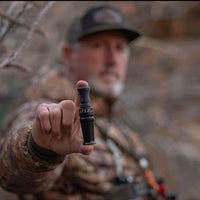
The Slayer External Calf Call is the most straightforward option for hunters who want to create calf sounds without using a diaphragm.
Its modified tone board and reed are designed to produce the higher pitch of an elk calf. Use it to make soft calf mews, drawn-out cries, double mews and highly emotional distressed-calf sequences.
To create the sound:
- Begin with a high-pitched calf mew.
- Draw the next sound out with more emotion.
- Add two mews close together.
- Continue calling with changes in length, cadence and intensity.
- Pause briefly, then repeat the sequence as though the calf is still searching.
The External Calf Call is easy to run, making it an excellent choice for beginners or anyone who doesn’t want to rely on a diaphragm reed.
The Harem: Hands-Free Cow and Calf Emotion
The Harem is a compact, hands-free bite call that produces high-pitched, nasal elk sounds. Its bite-and-blow design makes it simple to operate while moving through timber or preparing for a shot.
While The Harem excels at high-pitched cow mews and nasal whines, added pressure, cadence and emotion allow you to move into higher calf sounds and distressed-calf sequences.
Use The Harem to create:
- High-pitched calf mews
- Drawn-out nasal cries
- Repeated searching sounds
- Double mews
- Hands-free calling sequences
Because it can be operated hands-free, The Harem is especially valuable when a bull is closing the distance and you need to keep calling without taking your hands off your bow.
Lolo Elk Reed: Finesse and Calf Realism
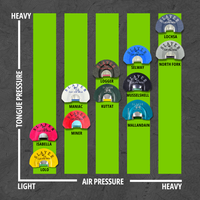
The Lolo Elk Reed is the lightest reed in Slayer’s Clearwater Series. Its ultra-light latex requires minimal air pressure and produces the soft, high-pitched tones needed for realistic calf vocalizations.
The Lolo is ideal for:
- Subtle calf mews
- Emotional distressed-calf sequences
- Close-range calling
- Pressured public-land elk
- Controlled calling in thick timber
- Finishing a bull inside bow range
Use light, controlled air pressure to keep the sound high. Add urgency through repetition, changes in cadence and drawn-out cries rather than trying to overpower the reed.
The Lolo is the finesse option. When elk are close and every detail matters, its high pitch and easy control help keep your calling in the calf spectrum.
Musselshell Elk Reed: Carry Calf Sounds Across Distance
The Musselshell Elk Reed combines high pitch with greater volume. It is built for sounds that need to travel across wind, timber, elevation and open country.
That makes the Musselshell an excellent choice for sending a distressed-calf sequence farther into the elk woods.
Use the Musselshell when:
- Sound-checking a new drainage
- Trying to locate or relocate elk
- Calling across open country
- Fighting wind or difficult terrain
- You need high-pitched calf sounds to carry farther
Create the same emotional sequence, including drawn-out cries, double mews and repeated calling. Then use the Musselshell’s added volume to reach the next ridge, bench or terrain feature.
Within the Clearwater System, the Lolo gives you close-range finesse while the Musselshell provides long-range reach.
When to Use a Calf-in-Distress Sequence
A distressed-calf sequence can be used to locate elk, relocate a herd that has moved or pull elk toward your setup.
Turner describes using the sound as a type of “sound check.” Call into the next piece of terrain, then listen carefully. A cow may mew back. A bull may bugle. You may hear movement or breaking branches as an elk approaches without vocalizing.
If nothing responds and you hear no movement, advance to the next terrain feature and repeat the process.
When a bull does not have cows, he may come directly toward the calf sound. If a herd responds, a cow may approach first with the bull following behind her. Be ready before beginning the sequence because an instinctive response can bring elk closer than expected.
Common Distressed-Calf Calling Mistakes
Making Only One Mew
One mew may get an elk’s attention, but it doesn’t create the full picture of a lost calf. Use a sequence that communicates urgency and continues long enough to tell the story.
Dropping Too Low
A deep sound may move out of the calf spectrum and begin to resemble a mature cow. Keep the pitch high and youthful.
Confusing Emotion with Volume
A distressed calf should sound emotional, but louder isn’t always better. Match your volume to the terrain and distance. Use cadence and repetition to add emotion.
Calling Before You’re Ready
Elk may respond quickly or approach silently. Set your feet, identify shooting lanes and prepare your equipment before beginning the sequence.
Repeating the Exact Same Pattern
A real calf in distress doesn’t perform a perfectly timed script. Change the length, spacing and intensity of the sounds while maintaining the same high-pitched calf voice.
Choose the Right Slayer Call for the Situation
If you want the easiest option without a diaphragm, start with the External Calf Call.
If you want a simple hands-free call, choose The Harem.
If you need high-pitched calf finesse at close range, reach for the Lolo.
If you need distressed calf sounds to travel across distance, use the Musselshell.
Each call approaches the sound differently, but the objective remains the same: stay high, add emotion and sound like a calf that genuinely needs help.
Create a Sound Elk Instinctively Understand
Successful elk calling isn’t only about producing a realistic noise. It’s about communicating the right message at the right moment.
A calf in distress creates a clear and emotional message. It sounds vulnerable. It sounds separated from the herd. Most importantly, it gives nearby elk a reason to respond.
Keep the pitch high. Draw out the cries. Double the mews. Add urgency and emotion. Then be ready, because the sound of a calf asking for help may be exactly what brings the herd your way.